

The thyroid is a small, butterfly-shaped gland located at the base of your neck, but don't let its size fool you. It serves as the master controller for your body’s metabolism, influencing everything from your heart rate and body temperature to how quickly you burn calories. When your thyroid is functioning perfectly, you likely don’t give it a second thought. However, when it falls out of balance, the resulting thyroid disorder symptoms can affect nearly every organ system in your body.
Understanding the nuances of thyroid health is essential because thyroid issues are frequently misdiagnosed or dismissed as general stress or aging. By identifying the signs early and advocating for a comprehensive thyroid function test, you can begin a journey toward accurate treatment and a swift recovery.
Understanding the Two Main Players: Hypothyroidism vs Hyperthyroidism
Most thyroid issues fall into one of two categories: the gland is either underactive or overactive. Understanding the difference between hypothyroidism vs hyperthyroidism is the first step in recognizing why you feel off.
Hypothyroidism (Underactive Thyroid)
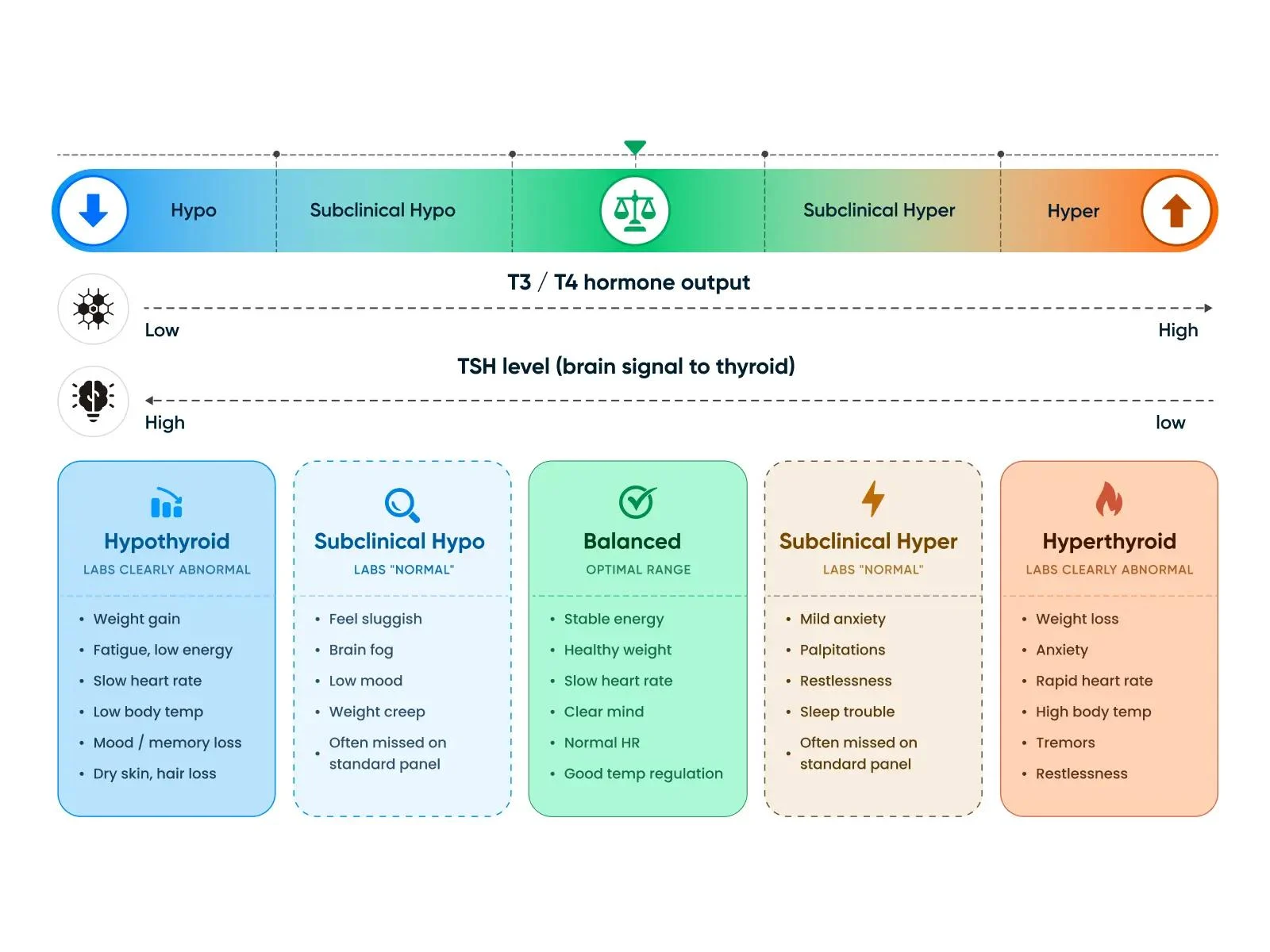
In hypothyroidism, your thyroid gland does not produce enough thyroid hormones. This effectively slows down your body’s internal engine. Think of it like a car running out of fuel. Common symptoms include unexplained weight gain, chronic fatigue, feeling cold all the time, dry skin, thinning hair, and depression. To add to that, many patients describe a persistent brain fog and a sensation of moving through sludge.
Hyperthyroidism (Overactive Thyroid)
Conversely, hyperthyroidism occurs when the gland produces an excess of hormones, sending your metabolism into overdrive. This is like a car with a stuck accelerator.
- Common Symptoms: Sudden weight loss, rapid or irregular heartbeat (palpitations), anxiety or irritability, tremors in the hands, and increased sensitivity to heat.
- The Racing Feeling: Patients often feel like they are vibrating or constantly on edge, even when resting.
The Importance of T3 and T4 Balance
To understand your thyroid, you have to look at the specific hormones it produces: Thyroxine (T4) and Triiodothyronine (T3). T4 is the storage hormone, while T3 is the active hormone that your cells actually use for energy.
Achieving a perfect T3 and T4 balance is the holy grail of thyroid treatment. Many traditional doctors only test for TSH (Thyroid Stimulating Hormone), which is a signal from the brain but doesn't tell the whole story of what is happening at the cellular level. If your body isn't efficiently converting T4 into the active T3, you may still experience severe thyroid disorder symptoms even if your TSH levels look normal on paper.
Why T3 Matters:
- It regulates your basal metabolic rate.
- It supports healthy brain function and mood.
- It is essential for maintaining a healthy body temperature.
- It plays a key role in digestive health and regularity.
Navigating the Diagnostic Process
If you suspect your thyroid is the culprit behind your fatigue or weight changes, a standard screening isn't enough. A truly comprehensive thyroid function test should include a full panel to get a 360-degree view of your endocrine health.
What Your Lab Work Should Include:
- TSH: To see how hard your brain is screaming at your thyroid to work.
- Free T4: To measure the amount of hormone available for conversion.
- Free T3: To see the actual active hormone available to your cells.
- Reverse T3: To check if your body is blocking your active hormones due to stress or inflammation.
- Thyroid Antibodies: To rule out autoimmune conditions like Hashimoto’s or Graves’ disease.
Why Precise Treatment is the Key to Recovery
The most frustrating part of thyroid disorders is the subclinical zone, where you feel terrible, but your labs aren't bad enough for a traditional prescription. At Hormones By Design, we believe in treating the patient, not just the lab values.
Precise treatment means looking at the delicate interplay between your thyroid and your other hormones, such as estrogen and cortisol. For many women, thyroid issues are exacerbated by estrogen dominance or adrenal fatigue. By treating the thyroid as part of a larger hormonal ecosystem, we can achieve a more stable and lasting recovery.
4 Tips for Supporting Your Thyroid Health
- Optimize Selenium and Iodine: These minerals are the building blocks of thyroid hormones (always consult a provider before supplementing).
- Manage Chronic Stress: High cortisol can inhibit the conversion of T4 to active T3.
- Focus on Gut Health: A significant portion of hormone conversion happens in the gut; a healthy microbiome supports a healthy thyroid.
- Prioritize Quality Sleep: Your endocrine system repairs and recalibrates while you rest.
Reclaim Your Energy and Vitality
Don't let thyroid disorder symptoms steal your quality of life. Whether you are struggling with the sluggishness of hypothyroidism or the jittery anxiety of hyperthyroidism, there is a path back to balance. Accurate diagnosis and a personalized treatment plan can make the difference between simply getting by and truly thriving.
Are you ready to find out what's really going on with your metabolism? Reach out to Hormones By Design today to schedule your comprehensive thyroid panel and consultation.