
When exploring treatment options for menopausal symptoms, many women encounter conflicting information regarding safety, efficacy, and long-term health implications. Much of the hesitation surrounding hormone therapy stems from historic clinical studies that evaluated older, standardized forms of medication. Today, it is clinically vital to distinguish between traditional/standard medications and modern alternatives by evaluating bioidentical hormones vs standard HRT.
Traditional healthcare frameworks frequently employ a standardized, one-size-fits-all model for hormone replacement. This approach often utilizes mass-produced standard hormones in uniform doses, regardless of a patient's unique biological blueprint or individual serum levels. When clinical decisions are based strictly on broad population averages rather than personal biochemistry, patients may not achieve optimal symptom resolution.
To understand why these two therapeutic approaches yield different outcomes, we must look closely at their molecular structures and how they interact with cellular receptors.
Summary
- Women face confusing information about hormone therapy safety and effectiveness for menopause.
- Standard Hormone Replacement Therapy (HRT) uses uniform hormone doses without considering individual biochemistry.
- Bioidentical hormones have the exact molecular structure of natural human hormones, unlike altered standard HRT molecules.
- Bioidentical hormones fit cellular receptors precisely, while standard HRT may overstimulate or block receptors.
- The Women's Health Initiative study linked standard HRT to increased cardiovascular and breast cancer risks.
- Bioidentical hormones, especially transdermal estrogen, show a safer profile with lower clotting risks.
- Natural progesterone seems less likely to promote harmful breast cell growth compared to synthetic progestins.
- Custom compounded hormones allow precise, personalized dosing based on individual hormone levels.
- Compounding offers flexible delivery methods and the ability to balance multiple hormones together.
- Effective hormone treatment requires a comprehensive approach addressing the whole endocrine system.
- Personalized lab testing and clinical evaluation guide better menopausal symptom management.
The Core Distinction: Molecular Structure and Receptor Fit
The primary difference between traditional standard hormones and bioidentical hormones lies in their molecular structure. Standard HRT compounds, such as conjugated equine estrogens (derived from pregnant mares' urine) or medroxyprogesterone acetate, are altered molecules. Because many of these configurations do not exist naturally in the human body, they do not perfectly mirror endogenous human hormones.
Conversely, bioidentical hormones are synthesized from plant sources, such as wild yams or soy, and precisely engineered to replicate the exact biochemical design of the hormones produced by the human ovaries and adrenal glands.
This structural precision directly dictates how the molecules bind to your cellular receptors:
- The "Lock and Key" Mechanism: Your body's cells contain highly specific hormone receptors. A bioidentical molecule fits into these receptors perfectly, sending a clean, predictable biological signal.
- Standard Overstimulation or Blunting: Because standard HRT molecules possess altered side chains, they do not fit perfectly into human receptors. This imperfect fit can lead to the overstimulation of certain tissues or the accidental blocking of other essential hormonal pathways.
Evaluating Bioidentical Hormone Replacement Therapy Safety
Clinical safety discussions regarding hormone therapy are frequently traced back to the Women's Health Initiative (WHI) study published in 2002. It is medically significant to note that this study evaluated standard HRT, specifically a combination of conjugated equine estrogens and standard progestins. The data revealed certain elevated cardiovascular and breast tissue risks associated with standard variants.
Subsequent peer-reviewed research published in medical literature has highlighted distinct safety profiles when investigating bioidentical hormone replacement therapy safety. Because bioidentical hormones match human physiology, the body metabolizes and clears them through natural pathways.
Key safety and metabolic distinctions include:
Thrombotic Risk
Studies to date indicate that transdermal bioidentical estrogen does not increase the risk of blood clots or stroke in the same manner as oral standard estrogens because it bypasses the initial metabolic pass through the liver.
Breast Tissue Interaction
Evidence to date suggests that natural, bioidentical progesterone does not stimulate breast cell proliferation to the same extent as standard progestins, such as medroxyprogesterone acetate.
Custom Compounded Hormones
Standard HRT relies on prefabricated dosages manufactured by commercial pharmaceutical firms. However, female endocrine physiology does not always adhere to uniform brackets. A standard dose may provide too much hormone for one individual while failing to alleviate persistent symptoms in another.
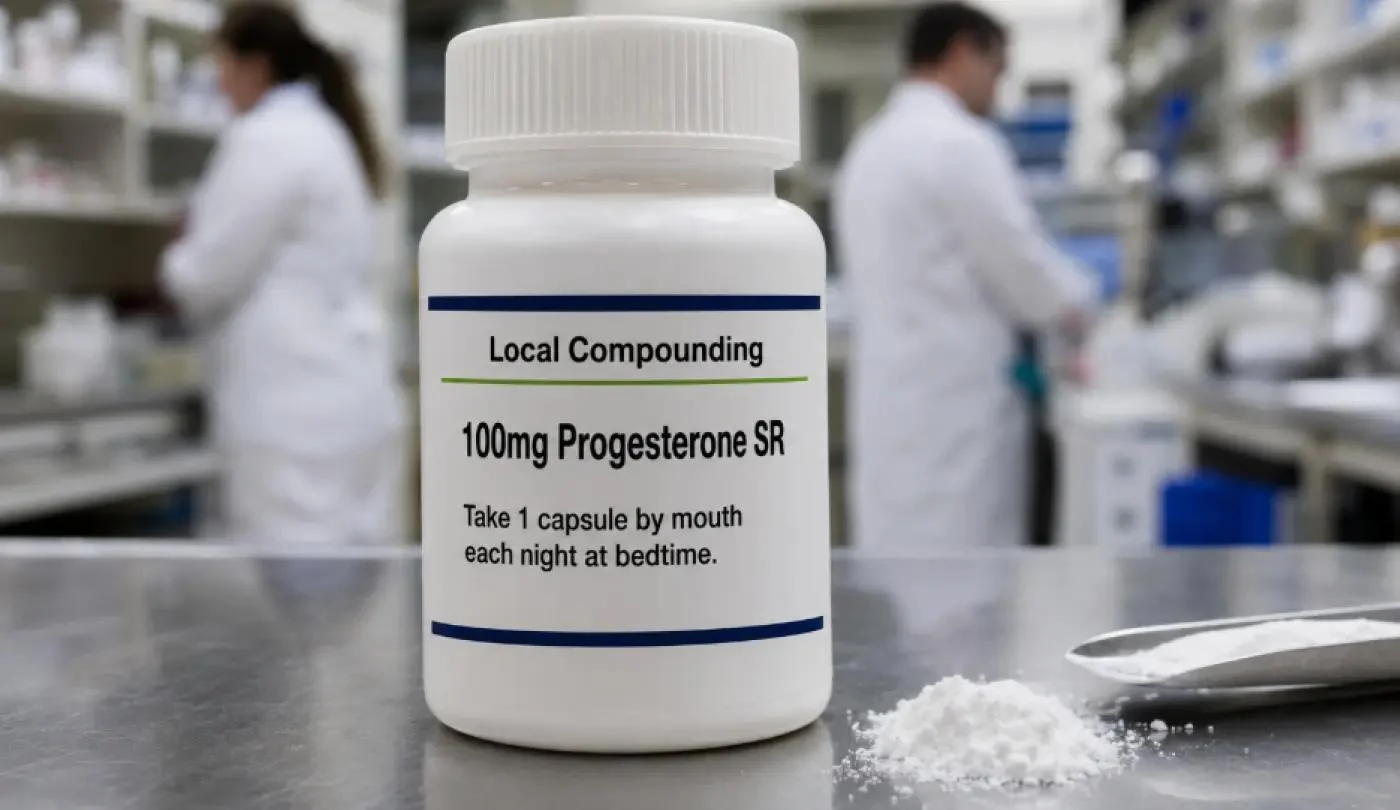
Your medical provider may address this imbalance through custom compounded hormones. Rather than relying on generic or standard formulations, your specific treatment starts with detailed blood panels measuring free and total hormone levels.
A tailored approach may offer therapeutic advantages:
- Precise Calibration: Pharmacy compounding allows for the creation of dosage strengths that may not be available in standard prescriptions, helping align treatment with your actual biological needs.
- Flexible Delivery Models: Based on individual absorption rates and needs, therapies can be administered through injections, combination transdermal creams, or sublingual tablets, avoiding the digestive complications associated with oral standard pills.
- Multi-Hormone Synergy: If testing reveals concurrent deficiencies in estrogen, progesterone, and testosterone, a customized compounded treatment may help balance these hormones simultaneously.
Hormone Balancing May Help Achieve Systemic Balance
At Hormones by Design, we believe hormone balancing requires a comprehensive strategy that views the endocrine system as an interconnected network. We also know that fluctuations in ovarian hormones can affect thyroid function, metabolic rates, and adrenal health. For this reason, we begin with a comprehensive lab panel and a review of your symptoms to guide your individualized treatment plan.
If you are experiencing persistent menopausal symptoms and wish to explore an individualized approach to hormone health, a detailed clinical assessment is the recommended next step. Contact Hormones by Design today to schedule a comprehensive consultation with one of our licensed medical providers and learn more about a personalized strategy tailored to your needs.
*A Note About Compounded Prescriptions
Compounded medications are not FDA-approved as finished products. They are prepared for individual patients under state pharmacy regulations rather than being mass-manufactured and reviewed by the FDA. However, the active ingredients used in compounding, such as estradiol, progesterone, and testosterone, are the same molecules found in FDA-approved commercial drugs. FDA approval applies to a specific manufactured product, not the ingredient itself, so a compounded preparation made from an approved ingredient has not been separately reviewed by the FDA.